
NEWS & DEVELOPMENTS
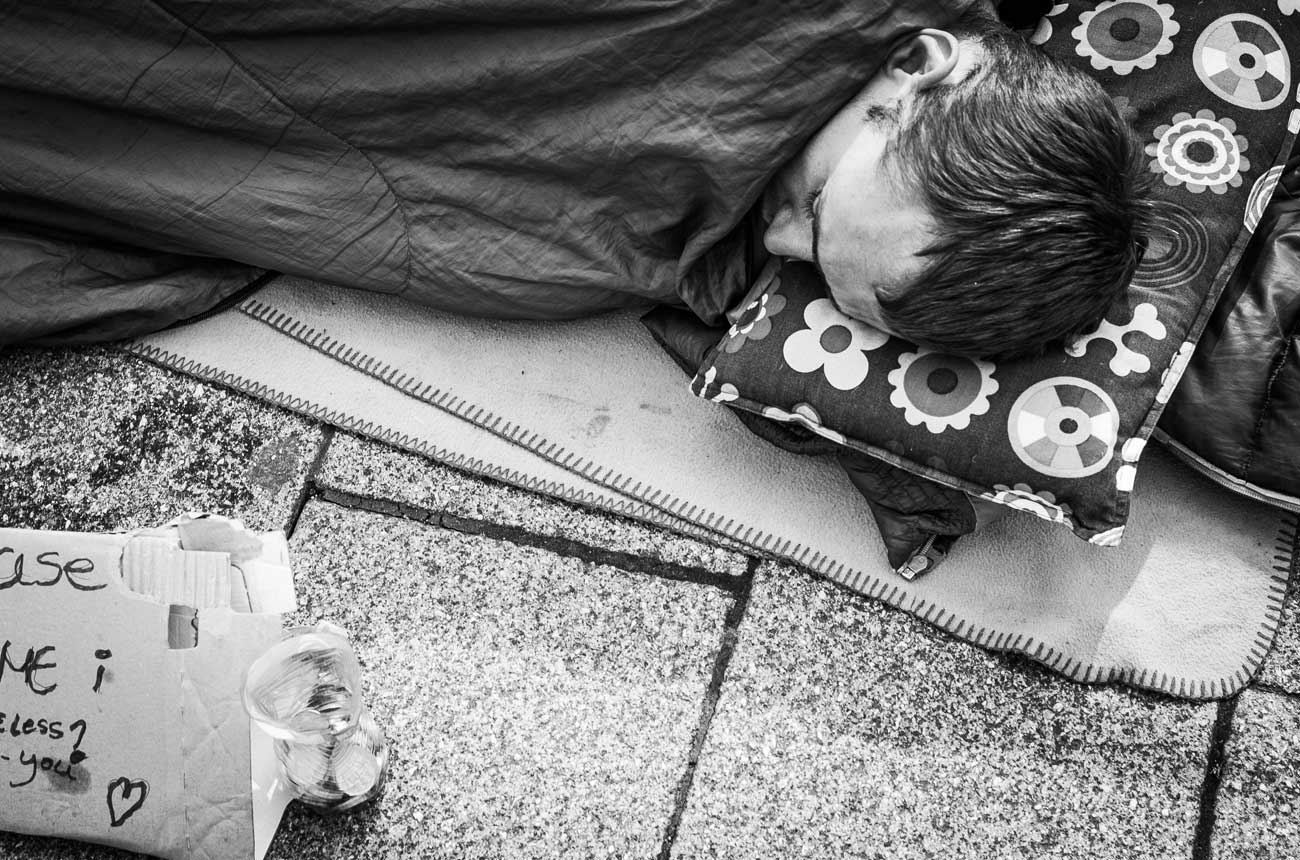
Statistics collected showed a new record number of people sleeping rough on any given night, 4,973, 171% higher than when current records began in 2010
Local authorities are currently organising counts of people sleeping rough across England, as they do each year during autumn time (and have done for nearly 20 years). These snapshot counts are taking place while efforts made being made to fulfil a commitment made by the Prime Minister to bring everyone indoors by Christmas, which for the practicality of policy has translated into giving everyone a route of the streets.
Statistics collected from snapshot counts which took place this time last year showed a new record number of people sleeping rough on any given night - 4,973, 171% higher than when current records began in 2010, when level were at 1,768. A previous (disputed) methodology for snapshot counts recorded the levels 430 individuals sleeping rough on any given night, a record low under the previous methodology.
This low figure was accomplished over an eight year period pursuing a goal of reducing rough sleeping to his near zero as possible, while fulfilling a commitment to sustain a previous reduction in rough sleeping by two-third between 1999 and 2002,.
Since 2010, there’s been an increase in the numbers of people sleeping rough, with exception of the years when the COVID-19 pandemic occurred. This is coincided with a persistent increase in the number of homeless households occupying temporary accommodation, which like the levels of sleeping, has also reached a record new high.
Plenty has been written and said about why homelessness is increasing. Amongst the numerous factors influencing these writing trends is, adverse impacts of government policy, especially reductions in local government spending and welfare reform. Other prominent factors are the cost-of-living crisis and the prevailing economic downturn, which can partially be attributed to Brexit. There has also been lots of commentary on the tremendous success of reducing rough sleeping by two-thirds between 1998 and 2003. Less has been reported on how that reduction was sustained and how rough sleeping was reduced to a record low, which is a noteworthy achievement.
Whilst it’s important to understand what factors are influencing the increase in homelessness, whether this be the number of people sleeping rough or the number of households occupying temporary accommodation, it’s also important to reflect on the critical success factors that reduced rough sleeping to a record low (whether this be 1,768 using the current snapshot methodology, or 430 under the previous methodology)
Two articles from leading academics capture a reliable analysis of what worked to reduce rough sleeping to the prevailing record low in 2010:
Alongside my own observations from working at government during this timeframe, three crucial success factors emerge:
The government sought to disrupt the lives of people sleeping rough by getting them swiftly indoors, and to disrupt the way services were provided by improving the standard of provision and practice.
The lives of people see people from the street were disrupted via the provision of assertive street outreach, which focused on finding people sleeping rough, assessing their needs and finding them emergency accommodation, typically in a hostel. This was a deliberate departure from what had been a common place approach, to make people’s lives as comfortable as possible while they were sleeping rough, by providing them with refreshments and bedding. Tea and sympathy might allow concern in individuals to express empathy with the plight of people sleeping rough, but it doesn’t enable them to get off the streets. Instead, a carrot and stick approach was deployed. The risks to sleeping rough work clearly articulated, it’s a well-established fact that the mortality rate of long-term rough sleepers is half of that of the general population.
The provision of services to people sleeping rough were disrupted through raising standards. Organisations that provided services were subject to independent audit and inspection from local authorities, using a nationwide quality assessment framework. This was supplemented by a set of standards for hostel accommodation, which was backed up by a large-scale hostel development programme, that promoted hostels as a place of change.
Hostels needed to be somewhere that was more than a bed for a night, but instead a place where people would want to stay and remain there while they recovered from their experience of street homelessness and suitable move on accommodation was identified. Too often people would be reluctant to go indoors or remain inside, because they would have to share sleeping spaces or other facilities and (understandably) disliked staying halls, churches, and other places that weren’t intended to be accommodating people at all let alone individuals who had experienced street homelessness. The concept of hostels being a psychologically informed environment was central to the design and building of new hostels. Separate bedroom for each person with ensuite facilities was a minimum standard. Hostel design was varied to cater for people of different characteristics (e.g. young people, women, disabled people).
The concept of hostels being a place of change was extended beyond the bricks and mortar of a building, to what was happening inside. The government funded the creation of a level three certificate (equal to an A-level) in supporting homeless people, to improve the knowledge and skills support workers, in recognition of the fact that this would further professionalise service provision and lead to better outcomes for individuals who have slept rough. The government also provided funding to enable meaningful activities to be carried out in hostels, so residence had something useful to occupy their time with.
Money was equally crucial to achieving the record low number of people sleeping rough.
From 2003 to 2009, the UK government spent £9.3bn (£1.6 billion per year) on housing related support. This revenue funding was created because of merging six different funding streams into a new programme known as Supporting People. This funded long-term supported housing for vulnerable adults with enduring support needs (for example, due to old age, mental illness, learning disability, etc), as well as short-term supported housing for individuals transitioning towards independence (for example, after leaving care, hospital, the armed forces, prison, etc), which included those that had experienced homelessness. There is a wealth of evidence to demonstrate that supported housing provided via specialist residential schemes, or specific units of accommodation in the community, as well as help for people to sustain their tendencies or resettle into their own homes, is invaluable to preventing homelessness and ending rough sleeping. Administered via local authorities, the programme aimed streamline the administration of funding for supported housing schemes and drive-up value for money, whilst also raising the quality and potential of service provision. After the ring fence on this budget being removed, local authorities reduced spending on supported housing by more than 50%. This reduction and spending coincided with local government funding cutbacks, and an increase in the numbers of people sleeping rough (and a rise in the numbers of homeless households occupying temporary accommodation).
From 2003 to 2010 around £0.5 billion of capital funding was spent on building new hostels throughout the country. As described above, these were intended to be places of change, where people would view as being preferable to stay in than sleeping on the streets and where they could begin a journey of recovery, towards sustaining independence. Existing hostels that were institutional in appearance were decommissioned and replaced with new hostels that were smaller, and more homely in style. This promoted an atmosphere of inclusivity and belonging. The increase in supply of new hostel bed spaces meant people living on the streets had somewhere to go that was suitable, safe and supportive.
During the same timeframe, around £1 million was spent on assertive outreach. Budgets from across different government departments were combined to foster a multi-agency approach to street outreach. Teams were made up of psychiatric nurses, social workers, police officers, and GPs, working alongside housing workers. These multidisciplinary teams, would go out onto the streets, make contact with people that sleeping rough, assess their housing and support needs at the time and place where they had found someone, and take proactive steps to find them somewhere to stay and get them into health and social care service services to help meet their wider support needs.
The money was typically allocated in three-year settlement, allowing commissioners and providers to have some certainty about the revenue and capital funding available, meaning that medium term plans could be made to recruit and train the right people. This certainty encouraged a good standard of applicants to apply for roles helping people sleeping rough and gave workers confidence to remain in these posts.
Time was the third success factor contributing towards the record low number of people sleeping rough. The government goal was to reduce rough sleeping to his near zero as possible. However, no specific timeframe was selected for this to be accomplished by. That allowed for steady and continuous progress towards the goal to be achieved, without the pressure of trying to accomplish a particular milestone by an arbitrary timescale. Commissioners and providers of services had time to make informed decisions about service specification and delivery. It allowed for learning to be disseminated and properly absorbed, so that policy of practice was truly informed by what works.
The target itself was also critical to the success. An ambition to reduce rough sleeping too, as near zero as possible is much more feasible than a commitment to end rough sleeping entirely.
The disruption, money and time was all facilitated by a team of government advisors recruited from local government and the voluntary sector, complimented by counterpart at national membership body, Homeless Link. These unique specialists acted as an interface between ministers and civil servants and providers and practitioners, transforming government ambitions into reality.
The critical success factors that reduced rough sleeping to a record low in 2010, are not exclusive to that era. Disruption, money and time can achieve a similar success over the years ahead. But, without faithfully following what worked, reducing the number of people sleeping rough down triple figures (let alone pushing numbers even further down to double figures or zero) is unlikely to be accomplished in the short to medium term.
